All about Cement
  • Send to
  • Print
  • Bookmark

Manufacturing process

Although cement is one of the oldest building materials around, its production process is a mix of traditional chemistry and hi-tech equipment to make the cement used in homes, hospitals and schools around the world

From the raw material quarry to the delivery of the end product, follow every step in the cement manufacturing process


Cement-making process (Credits: Eureka)

Step 1: extraction of raw materials

The raw materials needed to produce cement (calcium carbonate, silica, alumina and iron ore) are generally extracted from limestone rock, chalk, shale or clay. These raw materials are won from the quarry either by extraction or through blasting. These naturally occuring minerals are then crushed through a milling process.  At this stage, additional minerals are added to ensure the correct chemical composition to make cement is in place.  These minerals can be obtained from waste or by-products of other industries, such as paper ash.  After milling, the raw meal (as it is known) is transported to the plant where it is stored.   


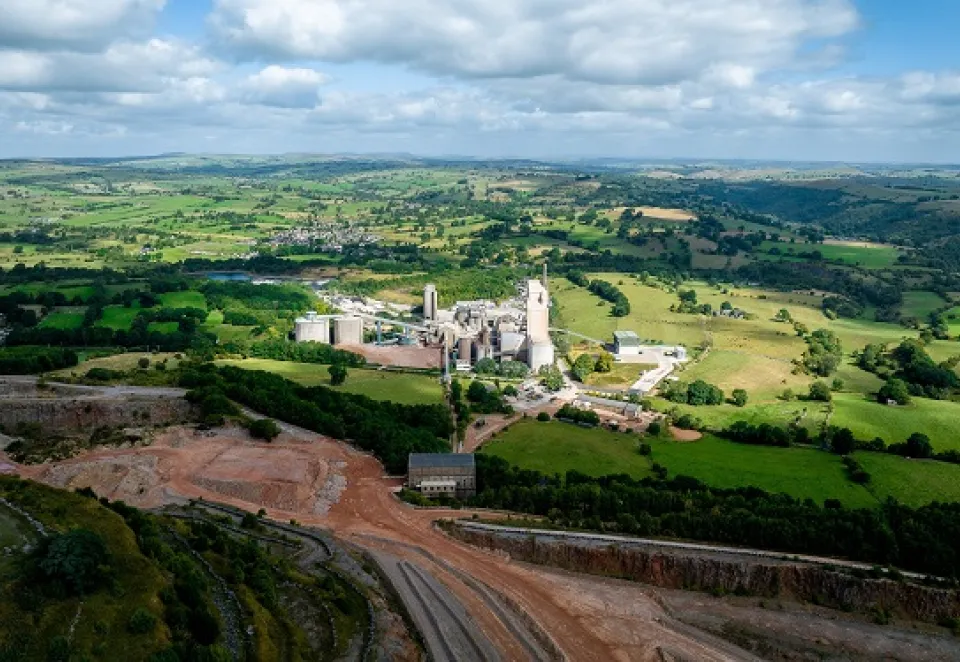
Hope cement plant, in Derbyshire

Hope cement plant, in Derbyshire

CO2 and cement

Why does the manufacture of cement produce CO2?

Cement manufacturing is the source of 5% of global CO2 emissions. The cement industry is a natural producer of CO2:

  • 60% of emissions are due to the transformation of raw materials at high temperatures (the "decarbonation" of limestone)
  • 40% result from the combustion required to heat the cement kilns to 1500°C.

In the UK, absolute CO2 emissions have been reduced by over 30 per cent (based on 1990 levels) due to the use of carbon-neutral materials, investment and movement of volumes from less efficient operations


Step 2: raw grinding and burning


Grinding produces a fine powder, known as raw meal, which is preheated and then sent to the kiln. The kiln is at the heart of the manufacturing process.  Once inside the kiln, the raw meal is heated to around 1,500°C - it is of a similar temperature to molten lava.  At this temperature, chemical reactions take place to form cement clinker, containing hydraulic calcium silicates.


In order to heat the materials to this very high temperature, a 2,000°C flame is required, which can be produced through the use of fossil and waste-derived fuels.  The kiln itself is angled by 3° to the horizontal to allow the material to pass through it, over a period of between 20-30 minutes.


Upon exiting, the clinker is cooled and stored ready for grinding to produce cement.

Inside a kiln during a maintenance shutdown

Inside a kiln

Step 3: cement grinding and shipping

A small amount of gypsum (3-5%) is added to the clinker to regulate how the cement will set. The mixture is then very finely ground to obtain ‘pure cement'. During this phase, different mineral materials, called ‘additions', may be added alongside the gypsum. Used in varying proportions, these additions, which are of natural or industrial origin, give the cement specific properties such as reduced permeability, greater resistance to sulfates and aggressive environments, improved workability, or higher-quality finishes. 


Finally, the cement is stored in silos before being shipped in bulk or in bags to the sites where it will be used.

Recycling

One of the main ways of recycling materials is through the use of additions to make cements with a lower carbon footprint.  Cements manufactured by Lafarge have an average addition content of 23%.  As well as incorporating additions from natural origin (such as limestone and volcanic rock), they can also come from industrial origin, for example pulverised fuel ash (from coal-fired power plants).  The use of additions:

  • enhances certain cement properties,
  • recycles materials that would otherwise have been sent to landfill,
  • reduces the consumption of natural raw materials,
  • reduces CO2 emissions

The company also recycles the use of wastes and by-products of other industries as raw materials and fuels.

Kiln reliability

Ensuring a good yield

The reliability of a kiln can be calculated by comparing the number of hours it has been operating, with the amount of manufacturing time which may have been lost (for example, if the supply of raw materials to the kiln has been temporarily halted due to an issue with the refractory inside the kiln itself).  Improving this indicator is key to achieving higher yield and productivity targets set in the Group's Excellence programmes.

  • Send to
  • Print
  • Bookmark

Responsible Sourcing. Lafarge Cement leads the way

As part of its continuous drive to support sustainable construction,

Lafarge Cement UK, was the first UK cement producer to be awarded the prestigious BES 6001 Responsible Sourcing Certificate for its products.

Lafarge Cement products have sustainability built in.

Lafarge Cement products have sustainability built in.